Brief Thoughts on the Twelve Disciples

And having called to [him] his twelve disciples, he gave them power over unclean spirits, so that they should cast them out, and heal every disease and every bodily weakness. Now the names of the twelve apostles are these: first, Simon, who was called Peter, and Andrew his brother; James the [son] of Zebedee, and John his brother; Philip and Bartholomew; Thomas, and Matthew the tax-gatherer; James the [son] of Alphaeus, and Lebbaeus, who was surnamed Thaddaeus; Simon the Cananaean, and Judas the Iscariote, who also delivered him up”. Matthew 10:1-4

It is remarkable when we think that the Lord, in His grace, chose twelve men to be with Him during His ministry while on earth. What is more amazing is that these men were of different backgrounds, different employment, and different characters, although they were Jewish people. It is intended to provide some thoughts on the various contributions of the disciples and the Lord’s gracious response.

Continue reading “Brief Thoughts on the Twelve Disciples”

The Day of The Lord in Thessalonians

There is a lot of confusion concerning a number of future events, including the rapture and the day of the Lord.  There is a gap of seven years between these two events, and the rapture of all true believers, whether they have passed away or form the assembly on earth at the time, comes first.  The object of this article is not to explain them and how they relate to each other but to compare the two epistles to the Thessalonians, which both speak of the day of the Lord. However, to make it easier for the reader who may not be sure about the truth of the rapture, I will explain that though the word does not occur in the Bible as such, it does convey the meaning of the words ‘caught up’ in 1 Thess 4:17. Yes, the rapture is when the Lord Jesus comes for His saints (all who accept Christ as Saviour are called saints – see Rom 1:7) to take them up to be with Him. The day of the Lord, on the other hand, is when He appears to the world and comes with His saints to reign on the earth. I will dwell a little more on the rapture, as this is vital, and then compare the bearing of the two epistles on the day of the Lord.

Continue reading “The Day of The Lord in Thessalonians”

Outline of the Epistle to the Romans

This is only a suggested outline of the wonderful epistle to the Romans, with the view that each reader will be encouraged to open the Bible, read and carefully study the epistle, and be strengthened in the faith and Christian walk. If you are not yet saved, it is an encouragement and an appeal for you to approach Christ, confess your sins and guilt before God, and accept Jesus Christ as your Saviour, and you, and others will see the progressive change in your life.

Romans and Hebrews, we can say are doctrinal epistles.

Romans was written to Gentile Christians and Hebrews was written to Hebrew Christians, who converted from Judaism.

In 2 Timothy 3:16 we see the character of the Word of God for doctrine (Romans and Hebrews), reproof (Philippians and 1&2 Corinthians), correction (Galatians and Colossians) and instruction in righteousness (Romans, Ephesians and 1&2 Thessalonians).

Continue reading “Outline of the Epistle to the Romans”

How the lost sheep was found

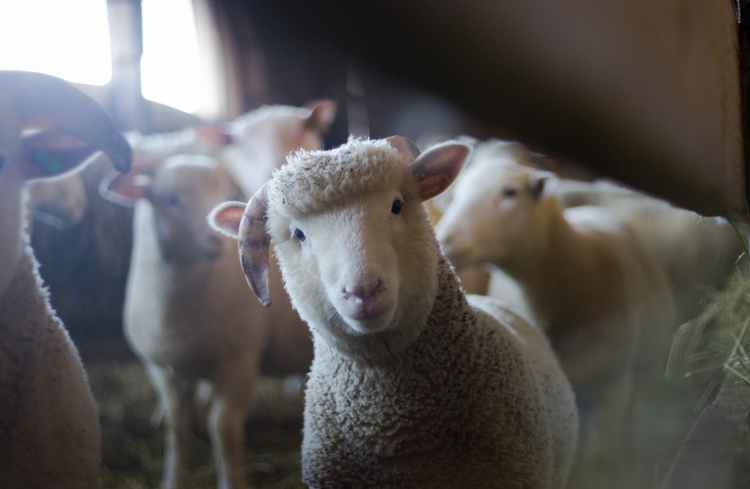
Photo by Trinity Kubassek on Pexels.com

This gospel tract is taken from an appendix of a book on the life and times of John Nelson Darby. The tract is published by Bible Truth Publishers.

On entering the miserable hovel in a wild district of Ireland, I looked around me and at first found no sign of any inhabitant, except an old woman who sat crouching over the embers of a fire. She rose as I entered and offered me her stool. I thanked her, and passing on, discovered in one corner of the hut a heap of straw, on which lay a poor sufferer. I approached and saw a young lad about seventeen years old, evidently in a state of extreme suffering and exhaustion and, it was to be feared, in the last stage of his life.

His eyes were closed, but he opened them on my approach and stared at me with a kind of wild wonder, like a frightened animal. I told him as quietly as possible who I was and the reason I had come, and I asked him a few of the simplest questions about his hope of salvation. He didn’t answer; he appeared totally unconscious of my meaning. On speaking to him kindly and affectionately, he looked up, and I learned from the few words he uttered that he had heard something of a God and future judgment, but he had never been taught to read. The Holy Scriptures were a sealed book to him and he was altogether ignorant of the way of salvation as revealed to us in the gospel. His mind on this subject was an utter blank.

Continue reading “How the lost sheep was found”

Some Thoughts on John 21

This article is based on some thoughts from a young people’s bible study at Balwyn, Melbourne Australia on Friday 7 February 2020 with the exception of the last paragraph.

The gospel of John, as is the common thought, presents to us Christ as the Son of God, and God the Son. John uses simpler words like ‘life’, ‘love’, but are more difficult to understand than any of the other gospels. John does not copy from Matthew, Mark or Luke, who happen to record similar events, but from different perspectives. For example, the miracles that the Lord Jesus performed in the gospels are called miracles, but John refers to them as ‘signs’, and there are specific signs written for the object that the readers may believe that Jesus is the Christ, the Son of God. After believing, the result is eternal life (Jn 20:30-31), or life in His name. Eternal life in itself is a subject that is large, but it is not the intention to take up in this brief article.

Continue reading “Some Thoughts on John 21”

PSALM 1

Blessed is the man that walketh not in the counsel of the wicked, and standeth not in the way of sinners, and sitteth not in the seat of scorners; But his delight is in Jehovah’s law, and in his law doth he meditate day and night. And he is as a tree planted by brooks of water, which giveth its fruit in its season, and whose leaf fadeth not; and all that he doeth prospereth.        Psalm 1:1-3

It is remarkable how the book of Psalms starts with the word ‘blessed’, and 150 psalms later ends with another wonderful word, ‘hallelujah’. We see at the end of the book of Job that God blesses the man Job when he repented and realized that he was nothing. God blessed him with more than he had before, and now the Psalms start with the same word, ‘blessed’. This ‘blessed’ describes the life of the godly man, and we know, that this Man we read of in the first three verses is our Lord Jesus Himself. He is that godly man Who, as a man when He was on earth, was totally dependant on God the Father.

Continue reading “PSALM 1”

The Tabernacle – God’s dwelling place

Note: This article is taken from a portion of a book by Roger Daniel, called ‘The Tabernacle Talks Today’. The author attempts to use some of this in his own words, draw on other thoughts and not directly copy from the original authorship.

ITS MATERIALS AND CONSTRUCTION

The tabernacle, like the assembly (or Church) today, was to be God’s dwelling place among His people (Ex 25:8). The materials all speak of Christ – His Person and His redemptive work on the cross. We are reminded in Hebrews 10:1, “For the law, having a shadow of the coming good things, not the image itself of the things, can never, by the same sacrifices which they offer continually yearly, perfect those who approach.” So here the tabernacle was just a shadow of the good thing to come, which is the assembly as we have today. We are also reminded that the tabernacle and other things in the Old Testament were ‘types’ – see 1 Cor 10:11. So then we have shadows and types in the Old Testament, like the tabernacle, pointing to the New Testament, like the assembly. The construction of the tabernacle speaks of our devoted service to our Lord. Everyone had a task in constructing the tabernacle. So today, everyone has a task in the assembly, the house of God.

Continue reading “The Tabernacle – God’s dwelling place”

Matthew 13

“And that same day Jesus went out from the house and sat down by the sea. And great crowds were gathered together to him, so that going on board ship himself he sat down, and the whole crowd stood on the shore. And he spoke to them many things in parables, saying, Behold, the sower went out to sow:”                                 Matt 13:1-3

PARABLES IN MATTHEW 13

In Matthew 13 we have a remarkable set of 7 parables that the Lord Jesus spoke when He was here on earth. The first four parables are spoken by the sea and the last three are spoken in the house. Just a bit of background, the Lord was rejected by His people in chapter 12, where at the end of the chapter He broke all of His natural ties with the Jews – see Matt 12:46-50. Then at the start of chapter 13 He went out of the house, which speaks of the Jews, and sat down by the sea. The sea speaks of the restless nations, or the Gentiles.

The first four parables give us an illustration of a moral declining stage of the system of Christendom, which includes all professing Christians, whether true or false. While these parables do not represent the assembly or Church (true believers), we can still see the declining stage of the assemblies in Revelation 2 and 3, as represented by the seven parables.

Continue reading “Matthew 13”

The Lord’s Commission

It is with great interest, care and a real blessing to look at the differences in the gospel accounts, especially in the Synoptic Gospels of Matthew, Mark and Luke. We can say that John’s Gospel takes up a very special and dear place in the Word, and in our hearts. In this article, it is my intention to draw on some differences that we find in the Lord’s commission to His disciples and what this could possibly mean for us, or what could we take out of this. Obviously, this is very important as “every scripture is divinely inspired” (2 Tim 3:16). A friend actually asked me once about the commission in the gospels and if they all apply to us and if we should go and make disciples, etc, so I endeavoured to explain from the Scriptures what the significance of the commission is and what we can take from these instructions.

After His resurrection and before ascending into heaven (the Father’s house), the Lord gave instructions to His disciples that we find in Matthew 28, Mark 16, Luke 24 and John 21. The Lord did not ascend into heaven in John’s gospel. We might ask, why the differences?

Continue reading “The Lord’s Commission”

Review of the Offerings

Study Notes
A REVIEW OF THE OFFERINGS
Similarities and Comparisons:
• All the offerings point to Christ (see Hebrews 10:1, 5-7).
• Of three offerings in Leviticus it is said: ‘an offering by fire to Jehovah of a sweet odour’.
These are the burnt offering, meal offering and peace offering.
• The burnt offering, peace offering and sin offering involve the person who brings the offering laying his hand on the head of the animal. This conveys identification with the offering or sacrifice.
• In Hebrews 10:5-7, we have four major offerings mentioned. They are sacrifices (peace offerings); offerings, or in Psalm 40, oblations (meal offerings); burnt offerings and offerings for sin (sin offerings).
• The burnt offering is a picture of Christ doing the will of His Father, and giving up all that He has. Psalm 40 portrays this offering, as does John’s Gospel. The burnt offering includes the thought of acceptance (Lev. 1:4): we are accepted and God accepts our worship.
• The meal offering is a picture of Christ’s perfect life when He was here on earth. Psalm 16 presents the features of the meal offering. Leaven (a type of sin) was not to be used in the meal offering, nor honey as this is typical of what is only natural sweetness.
• The peace offering is a picture of our fellowship or communion with God and one another through the perfect work of Christ. Psalm 85 and Luke’s Gospel speak of the peace offering. And it has this distinguishing feature – it can be of a male or female animal – because it speaks of God’s side and our side in the matter of fellowship.
• The sin offering is a picture of Christ on the cross, bearing the judgment for our sins at the hand of God during the three hours of darkness. It was not the Father who forsook Him, as some hymns suggest; God, in His holiness and righteousness, forsook Christ, the
Son of Man. The sin offering conveys the thought of forgiveness for the person who brings the offering (Lev. 4:35). Psalm 22 and Mark’s Gospel give us the features of this offering.
• The red heifer in Numbers 19 is a special offering. It is separated from the offerings in Leviticus, and also one that had to be offered – it was not voluntary. God prescribed the offerings in Leviticus because He wanted the people of Israel to draw near to Him, and this is conveyed by the offering of the red heifer because it was available for the people as a whole. It was a constant provision for Israel’s journey to Canaan – ‘a water of separation … a purification for sin’ – in view of the defilement of the ‘great and terrible wilderness’. If this was required in those far-off days, how much more we need cleansing
from the defiling effect of what we hear and see in our day. The water for this is the Word of God as we find in John 13 and Ephesians 5:26-27. We do not offer animals anymore, but we offer that of which they speak and look to the One who offered Himself once and
for all.
To conclude, these offerings, which were to be presented continually, were only types or shadows of the true offering and sacrifice of Christ.
• See Hebrews 9:13-14 and 10:22. If the blood of animals could cover sins for a very short time only, how much more precious is the blood of Christ (1 Pet. 1:18-19), which cleanses us from all sin?
• The voluntary offerings in Leviticus 1-3 were provided for all who were exercised among God’s people, Israel. So today, we ought to worship God in spirit and truth as true worshippers together (John 4:23).
• The priests of old interceded for the people, but now we have our Great High Priest who intercedes for us (1 Tim. 2:5; Heb. 4:14-16).